Google Pixel 11 Puts Gemini at the Center of AI Phones
Google's Pixel 11 puts Gemini at the heart of the smartphone experience, bringing more powerful AI features and agentic capabilities as Google and Apple compete to define the next generation of AI phones.
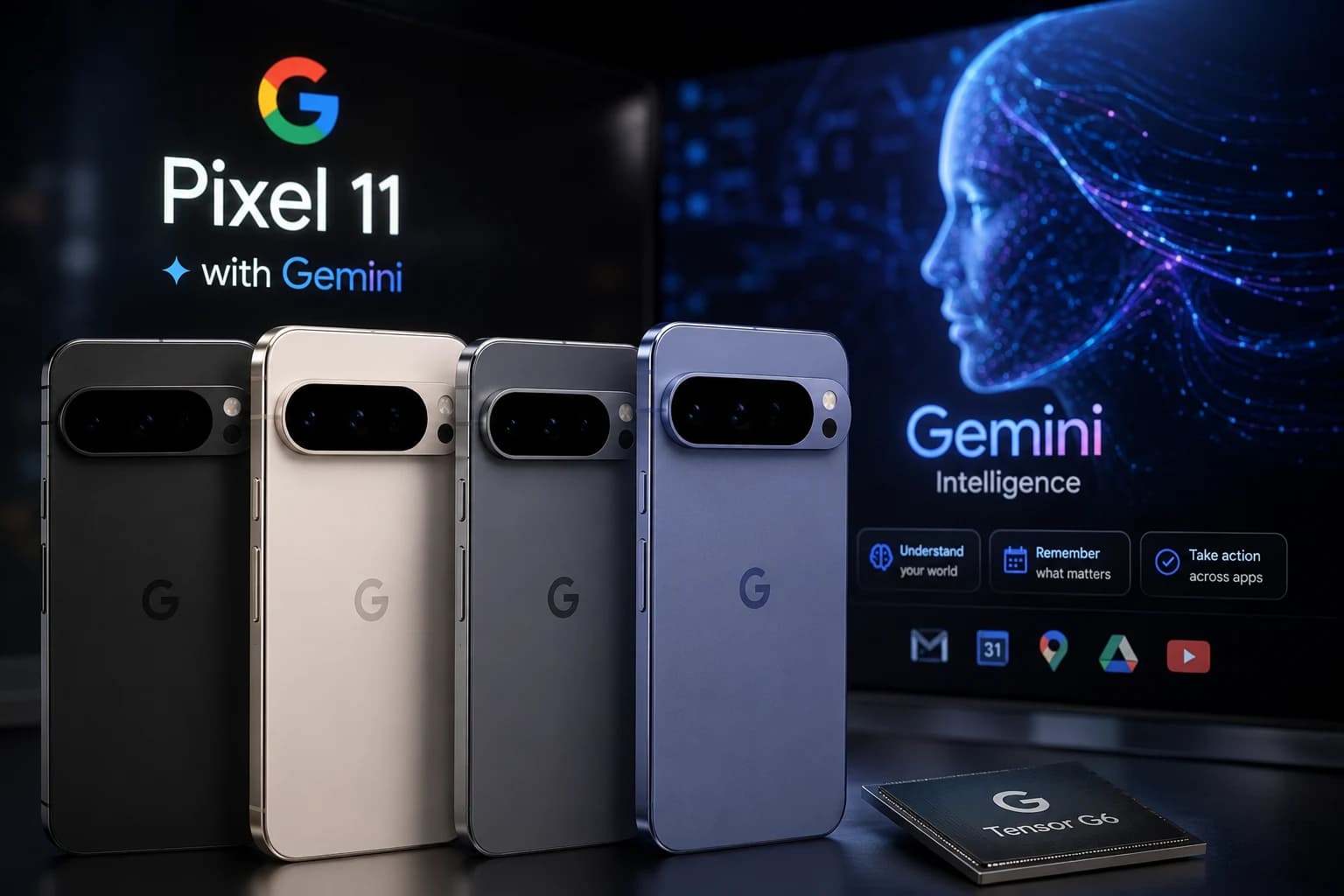
Google Pixel 11 Introduces Gemini as the Phone's New Interface
Google has unveiled the Pixel 11 family, including the Pixel 11, Pixel 11 Pro, Pixel 11 Pro XL, and Pixel 11 Pro Fold. However, the bigger story is not about the hardware. Google is positioning Gemini Intelligence as a new operating layer for the smartphone. This layer can understand information across apps and help users complete tasks rather than simply answering questions. The strategy arrives just as Apple prepares to bring Google's Gemini technology into its next generation of Apple Intelligence and Siri.
Google Pixel 11 Puts Gemini at the Center
The Pixel 11 lineup represents a significant shift in Google's product strategy. Instead of treating AI as a collection of optional features, Google is making Gemini a core part of how users interact with the phone. Gemini can connect information from services like messages, calendars, and maps, then suggest or perform follow-up actions. This approach moves the assistant closer to an agentic system, where the goal is completing a task rather than producing a conversational response.
The hardware is still important. The Pixel 11 range uses Google's new Tensor G6 platform and brings improvements to the camera, display, and charging. The base Pixel 11 starts at $899 with 256GB of storage and 12GB of RAM. The Pro models offer upgraded cameras and AI-assisted photography and video tools. The phones are scheduled to launch on August 20, 2026.
Gemini Is Becoming an Action Layer
The most significant change is the move from chatbot-style AI toward assistance that operates across the phone. Gemini Intelligence can work with information already available through Google's ecosystem and help initiate actions like checking availability, comparing travel choices, or starting a reservation. Google is also integrating AI capabilities directly into Android, rather than forcing users to open a separate chatbot.
This distinction is crucial because smartphone assistants have traditionally been limited by the boundaries between apps. A user might ask an assistant for information but still have to open another application to finish the task. Agentic AI attempts to remove some of those steps. If Google can make that experience reliable, Gemini becomes less like an app and more like an interface for the device itself.
Google and Apple Are Now Chasing the Same AI Idea
The timing of the Pixel 11 launch is particularly significant. Apple and Google announced a multi-year collaboration in January under which future Apple Foundation Models will be based on Google's Gemini models and cloud technology. Apple said those models will help power future Apple Intelligence features, including a more personalized Siri.
This creates an unusual competitive relationship. Google is using Pixel to demonstrate what Gemini can do inside an operating system, while the same underlying technology is being prepared to support Apple's next generation of AI features. Google gets an opportunity to establish its vision for agentic smartphone interaction before that technology reaches Apple's much larger installed base.
The Real Test Is Whether AI Can Sell New Phones
Better AI does not automatically create a reason for consumers to replace a working smartphone. Counterpoint's research shows that generative AI is gaining traction as a smartphone feature. In a 2024 survey, 59% of respondents said they planned to purchase a generative-AI-enabled smartphone within the following year, while 69% said they valued the technology for saving time.
The challenge for Google is turning that interest into a compelling upgrade cycle. Features like improved cameras and brighter displays are easy to compare, but the value of an agentic assistant depends on whether it reliably saves users time. If Gemini can consistently handle useful multi-step tasks, AI could become a more meaningful reason to upgrade. If it mostly produces better answers to questions, consumers may have less incentive to replace their existing phones.
Higher Prices Make Google's AI Bet Harder
Google is launching the Pixel 11 generation into a smartphone market facing higher component costs. The Pixel 11 starts at $899, while the Pixel 11 Pro, Pixel 11 Pro XL, and Pixel 11 Pro Fold start at $1,099, $1,299, and about $1,899 respectively. Those prices are roughly $100 higher than the corresponding previous-generation models.
At the same time, the industry is dealing with memory supply pressure linked partly to surging demand for AI infrastructure. Counterpoint has warned that rising semiconductor costs are putting pressure on smartphone manufacturers in 2026. That makes Google's decision to emphasize AI especially important. The company needs the software experience to justify higher device prices at a time when consumers have more reason to question expensive upgrades.
Pixel 11 Could Define Google's Advantage Before the iPhone Catches Up
Google's strongest opportunity is not necessarily selling more phones than Apple. Pixel gives the company a controlled environment in which it can develop and demonstrate how Gemini should behave when it has access to the operating system, personal context, and connected services. The Pixel 11 is therefore a test case for a broader idea: that the next smartphone interface may be an AI agent rather than a grid of applications.
Apple will soon test a similar concept at much greater scale using Gemini-based technology for its next generation of Apple Intelligence. That makes the Pixel 11 launch more than another annual hardware refresh. Google is effectively putting its vision of the AI-native smartphone into consumers' hands first, while Apple prepares to bring a related model of interaction to the iPhone. The winner of this competition may ultimately be determined less by which company has the better chatbot and more by which one makes AI genuinely useful during ordinary phone tasks.