Oil Prices Rise as Hormuz Deal Hopes Fade
Oil prices are rising as hopes for a quick reopening of the Strait of Hormuz fade. Explore why a prolonged disruption could push Brent crude significantly higher.
Oil Prices Are Rising as the Hormuz Deal Fades
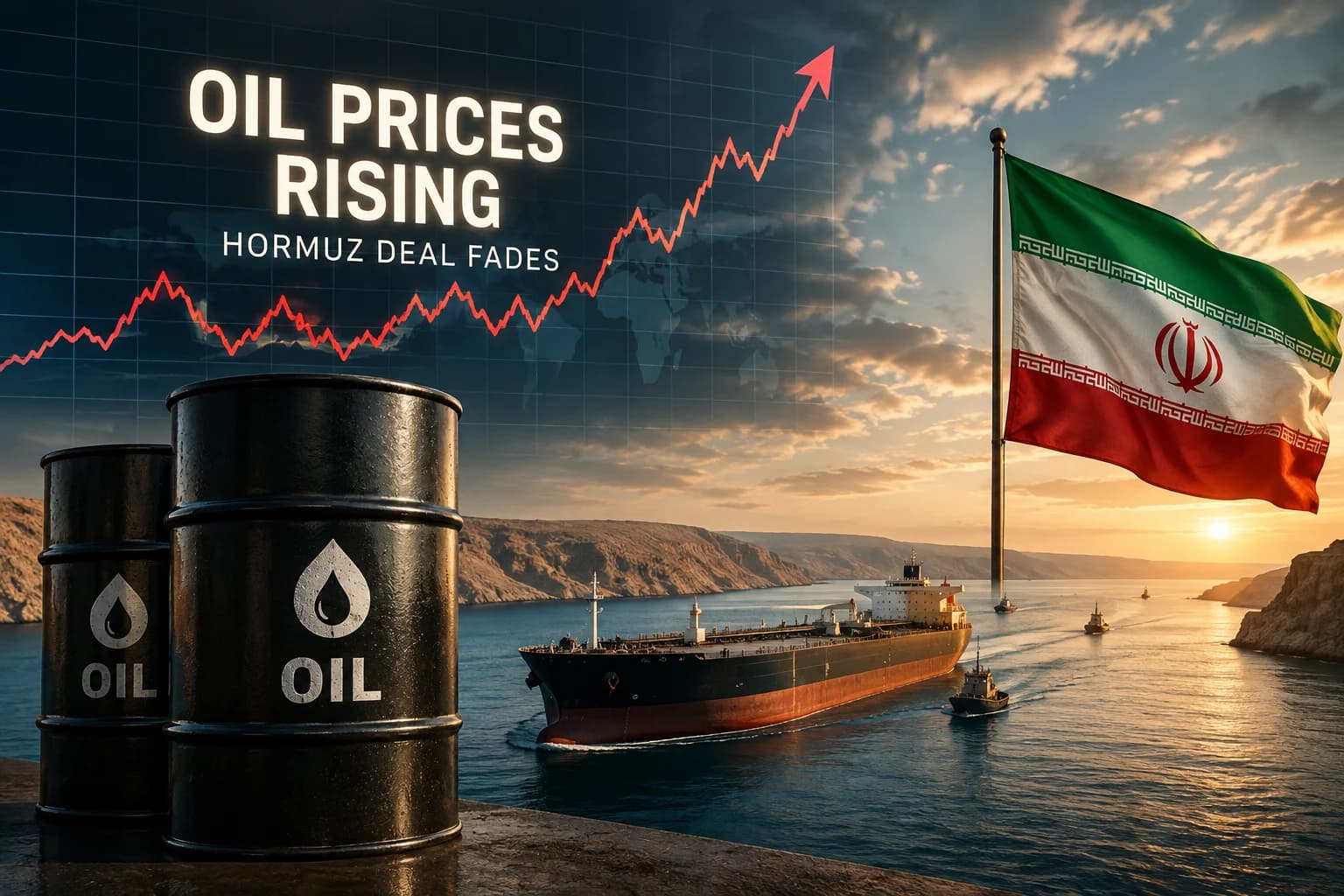
Oil prices are moving higher again as hopes for a quick reopening of the Strait of Hormuz weaken. Brent crude climbed above $89 a barrel on Tuesday, August 11, after rising more than 2%, with traders increasingly focused on the risk that the disruption could last longer than previously expected. The latest move shows why oil prices have remained surprisingly restrained despite continuing restrictions on one of the world's most important energy chokepoints.
The market had been pricing in a relatively quick diplomatic solution. That expectation pushed Brent down more than 7% last week, even though normal tanker traffic had not returned. The problem is that the physical oil market and financial market are now moving on different timelines. Traders can quickly price in the possibility of reopening, but actual shipping flows take longer to normalize.
Why Oil Prices Could Move Much Higher
The biggest risk is duration. If the Strait remains effectively restricted, inventories become increasingly important because they are absorbing the gap between available supply and normal consumption. The longer those inventories decline, the less room the market has to absorb another week or month of disruption without demanding higher prices. The source material supplied for this analysis identifies this as a potential market tipping point, with a prolonged closure potentially pushing prices toward $120-$140 a barrel.
That does not mean $120-$140 is a forecast or a guaranteed outcome. It is a stress scenario that depends on several conditions occurring together, including continued restrictions through Hormuz, rapid inventory depletion and insufficient alternative supplies. The World Bank has previously documented how the 2026 conflict produced an unusually large jump in Brent prices when tanker traffic through the strait approached a standstill.
The Market Is Still Betting on Alternative Supply
Oil prices have not fully reflected the potential size of the disruption because traders are also considering ways the market can compensate. Alternative export routes, production changes, weaker demand and changes in Asian buying patterns can temporarily reduce the impact of a shipping bottleneck. China has been particularly important because lower crude imports previously helped balance the market, although imports have since recovered.
There is also a difference between the Strait being technically navigable and the global oil trade operating normally. Reuters reported that only six vessels passed through on Monday, compared with a recent average of 11, while other shipping and energy infrastructure remained exposed to regional security risks. That suggests the market is dealing with a constrained transportation system rather than a simple open-or-closed switch.
Hormuz Is Becoming an Oil-Market Duration Trade
The most important question for investors is no longer simply whether the Strait will reopen. It is how quickly normal volumes can return. A temporary corridor or limited shipping arrangement may calm futures prices without immediately restoring the flows needed to replenish inventories. That distinction could keep oil markets volatile even if diplomatic talks produce incremental progress.
For now, the market is caught between two outcomes: a diplomatic breakthrough that allows energy flows to recover, or a prolonged disruption that forces inventories to carry an increasingly large share of global demand. Brent's move back toward $90 shows that traders are beginning to put more weight on the second scenario. If the deadlock continues, the risk is that oil prices rise not because of a single dramatic event, but because the market gradually runs out of spare time and inventory cushion.