Microsoft Services Suddenly Went Silent - What This Global Outage Reveals About Digital Dependence in 2026
Widespread outages across Microsoft Outlook, Teams, and Office disrupted work worldwide. The incident exposes how deeply businesses rely on a single digital backbone.
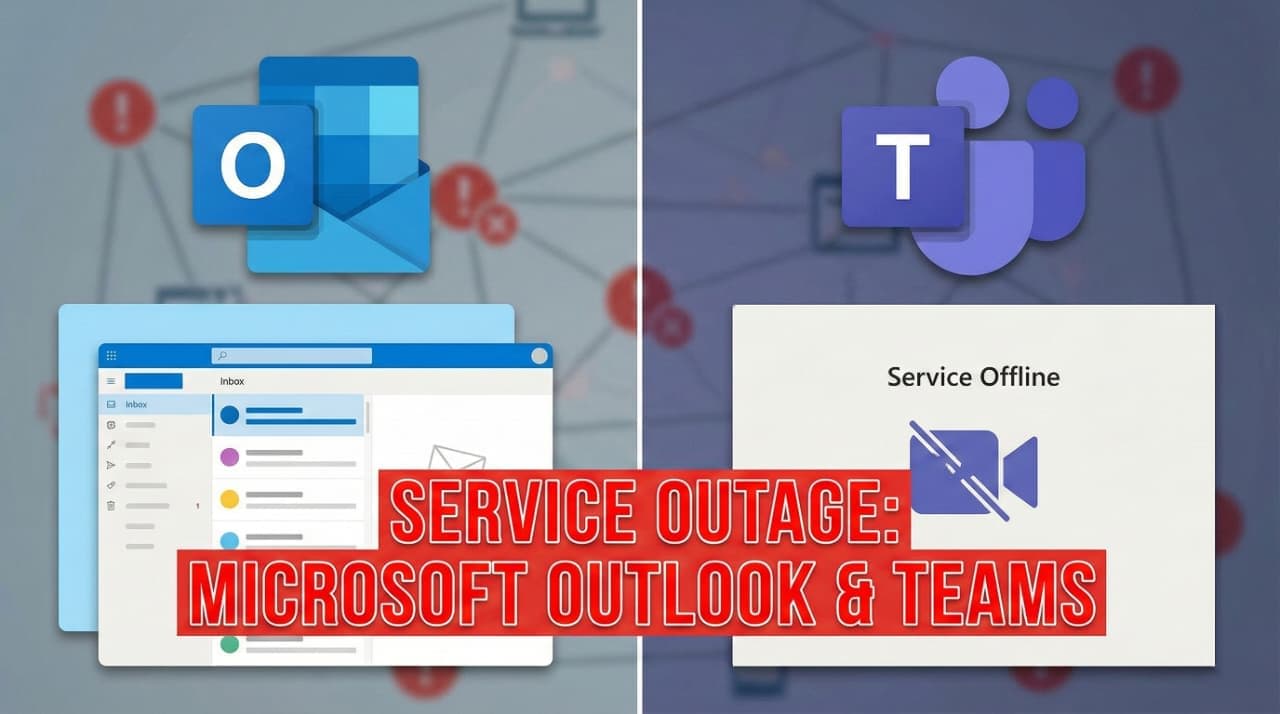
Microsoft Outage Triggers Widespread Disruption
A large scale Microsoft outage disrupted access to Outlook, Teams, and Office services, leaving thousands of users unable to send emails, join meetings, or access essential documents. Reports surged across the United States and quickly spread to the UK and other regions, highlighting how deeply Microsoft tools are embedded in daily operations.
For many organizations, the outage effectively paused communication. Businesses that rely on Teams for meetings and Outlook for time sensitive messaging faced immediate delays. Educational institutions and public sector offices also reported interruptions, underscoring the broad reach of Microsofts ecosystem.
Why a Single Outage Can Paralyze Entire Workforces
Microsoft's cloud based services function as the operational backbone for millions of companies. Email, collaboration, scheduling, and file storage are tightly integrated, which means a failure in one layer can ripple across the entire system. This level of integration delivers efficiency during normal operations but amplifies disruption when issues arise.
Unlike consumer apps that can be temporarily ignored, enterprise software outages carry immediate financial and operational consequences. Missed meetings, delayed approvals, and stalled workflows translate directly into lost productivity.
Early Signals Point to Cloud Infrastructure Stress
While Microsoft has not immediately disclosed detailed technical causes, early indicators suggest strain within cloud infrastructure components responsible for authentication and service routing. These systems manage how users log in and how data flows between regions, making them critical points of failure.
As cloud usage continues to grow globally, maintaining reliability across millions of simultaneous connections becomes increasingly complex. Even minor misconfigurations or regional overloads can cascade into widespread service interruptions.
The Global Impact Goes Beyond the United States
Although the outage was most visible in the United States, users in the UK and other markets also reported access problems. This global reach reflects the centralized nature of modern cloud platforms, where services are distributed across regions but governed by shared systems.
Comparisons are increasingly drawn with cloud strategies in China, where domestic providers often operate more isolated ecosystems. While no model is immune to outages, regional segmentation can sometimes limit global spillover.
What This Means for Digital Resilience in 2026
The Microsoft outage reignites discussion around digital concentration risk. As organizations standardize on a single provider for communication, collaboration, and data storage, resilience becomes dependent on that providers ability to deliver uninterrupted service.
Many experts argue that redundancy and diversification will become priorities in 2026. Businesses are expected to invest more in backup communication channels and contingency planning, even if it adds complexity.
Microsofts Long Term Challenge
For Microsoft, the challenge is not only restoring service quickly but maintaining trust. Enterprises choose Microsoft because reliability is assumed. Each outage raises questions about scalability as demand continues to rise.
How the company strengthens monitoring, redundancy, and transparency following this incident will shape confidence in its cloud platform going forward.
This article is for informational purposes only and does not constitute technical, financial, or operational advice.