Windows 11 Emergency Update Triggers Global Alarm - What Microsoft Fixed Overnight and Why It Matters in 2026
Microsoft rushed out an emergency Windows 11 update after performance crashes, shutdown failures, and Nvidia GPU complaints shook millions of PCs worldwide.
Microsoft Breaks Silence as Emergency Windows 11 Patch Rolls Out
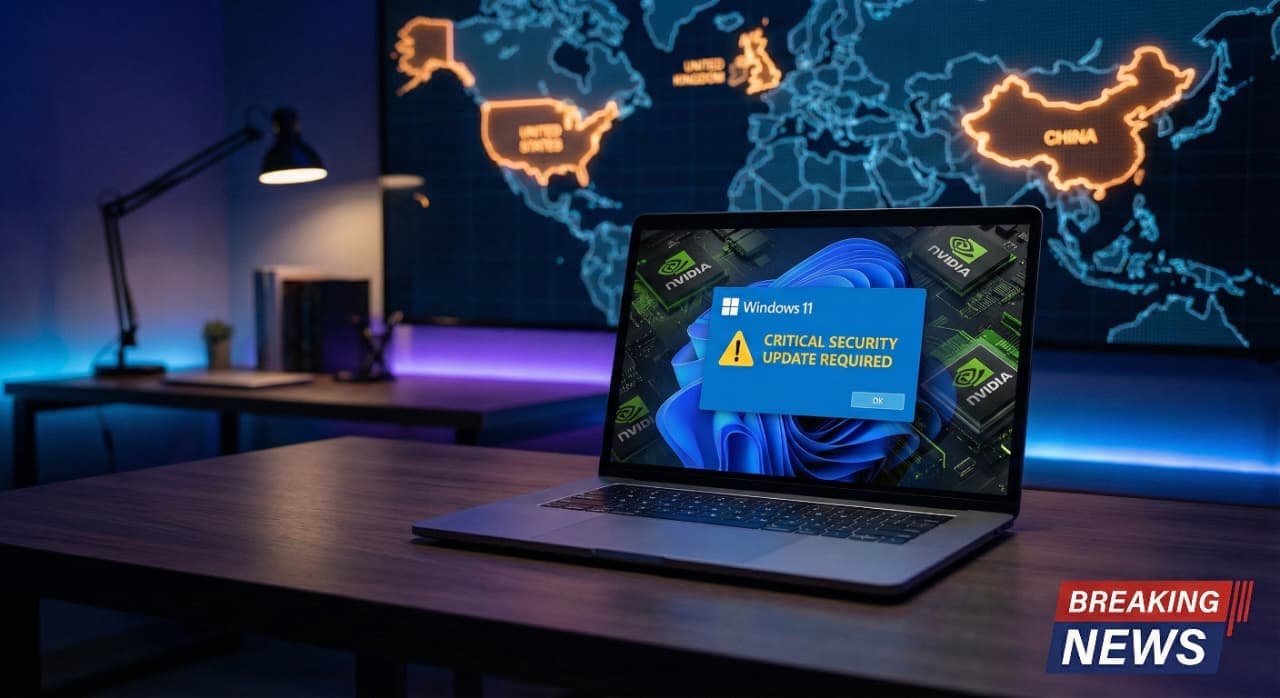
Microsoft has confirmed the release of emergency updates for Windows 11 after mounting reports of serious system disruptions following the first major update of 2026. Within hours of the rollout, users across the United States, the UK, and parts of Asia began reporting unexpected shutdown failures, sharp drops in Nvidia GeForce GPU performance, and system instability that affected both personal and enterprise machines.
The issue escalated quickly, forcing Microsoft to move outside its normal Patch Tuesday cycle. Emergency updates are rare and typically reserved for security threats or system wide failures, underscoring the severity of the problem.
What Went Wrong Inside the Windows 11 Update
The initial Windows 11 update introduced changes aimed at improving power management, background process handling, and GPU scheduling. Instead of delivering smoother performance, the update triggered widespread issues on certain hardware configurations.
Multiple users reported that affected computers refused to shut down properly, entering endless restart loops or remaining stuck on shutdown screens. In parallel, gamers and professionals using Nvidia GeForce GPUs noticed sudden performance degradation, including lower frame rates and unstable rendering behavior.
Early technical analysis suggests a conflict between updated Windows kernel processes and Nvidia driver communication layers, particularly on systems running recent GPU drivers optimized for AI workloads and high refresh rate displays.
Why Nvidia GPU Users Were Hit the Hardest
Nvidia GPU owners were disproportionately affected due to how Windows 11 manages hardware acceleration and power states. The emergency update addresses a scheduling flaw that caused GPUs to remain in partial power states, reducing performance while increasing system instability.
This issue was especially visible on gaming laptops and workstations, where GPU switching between integrated and dedicated graphics plays a critical role in system behavior. Microsoft coordinated with Nvidia to deploy mitigations that restore proper performance scaling and shutdown behavior.
Global Impact Across the United States, UK, and China
The timing of the issue amplified its impact. Businesses in the United States reported operational disruptions, while IT administrators in the UK delayed deployments of the update altogether. In China, where Windows 11 adoption continues to grow across enterprise and manufacturing sectors, system reliability concerns sparked rapid internal audits.
Microsoft confirmed that the emergency updates apply to most supported Windows 11 builds worldwide, including consumer, enterprise, and education editions.
What the Emergency Update Fixes
According to Microsoft, the emergency patch restores correct shutdown sequences, stabilizes GPU performance for Nvidia hardware, and resolves background process conflicts introduced in the original update. The company also adjusted power management routines that caused systems to remain in an unstable state during shutdown or restart.
Microsoft emphasized that the update does not introduce new features and focuses entirely on stability, reliability, and hardware compatibility.
What Users Should Do Now
Microsoft strongly recommends installing the emergency update as soon as it becomes available through Windows Update. Users who paused updates earlier this month should manually check for the patch to avoid ongoing instability.
For enterprise environments, Microsoft advised administrators to validate the update in controlled deployments before rolling it out broadly, particularly on systems relying heavily on GPU acceleration.
A Reminder of Windows Update Risks in 2026
This incident highlights the growing complexity of modern operating systems as Windows integrates AI workloads, advanced graphics pipelines, and deeper hardware optimization. While these changes promise long term gains, they also increase the risk of unintended side effects when updates interact with diverse hardware ecosystems.
As Windows 11 continues to evolve in 2026, emergency patches like this one may become more common as Microsoft balances innovation with system stability.
This article is based on publicly reported information and industry analysis. Software updates may behave differently depending on hardware configuration, region, and system settings.