Epic Games Launcher Linux Support Is Coming Soon
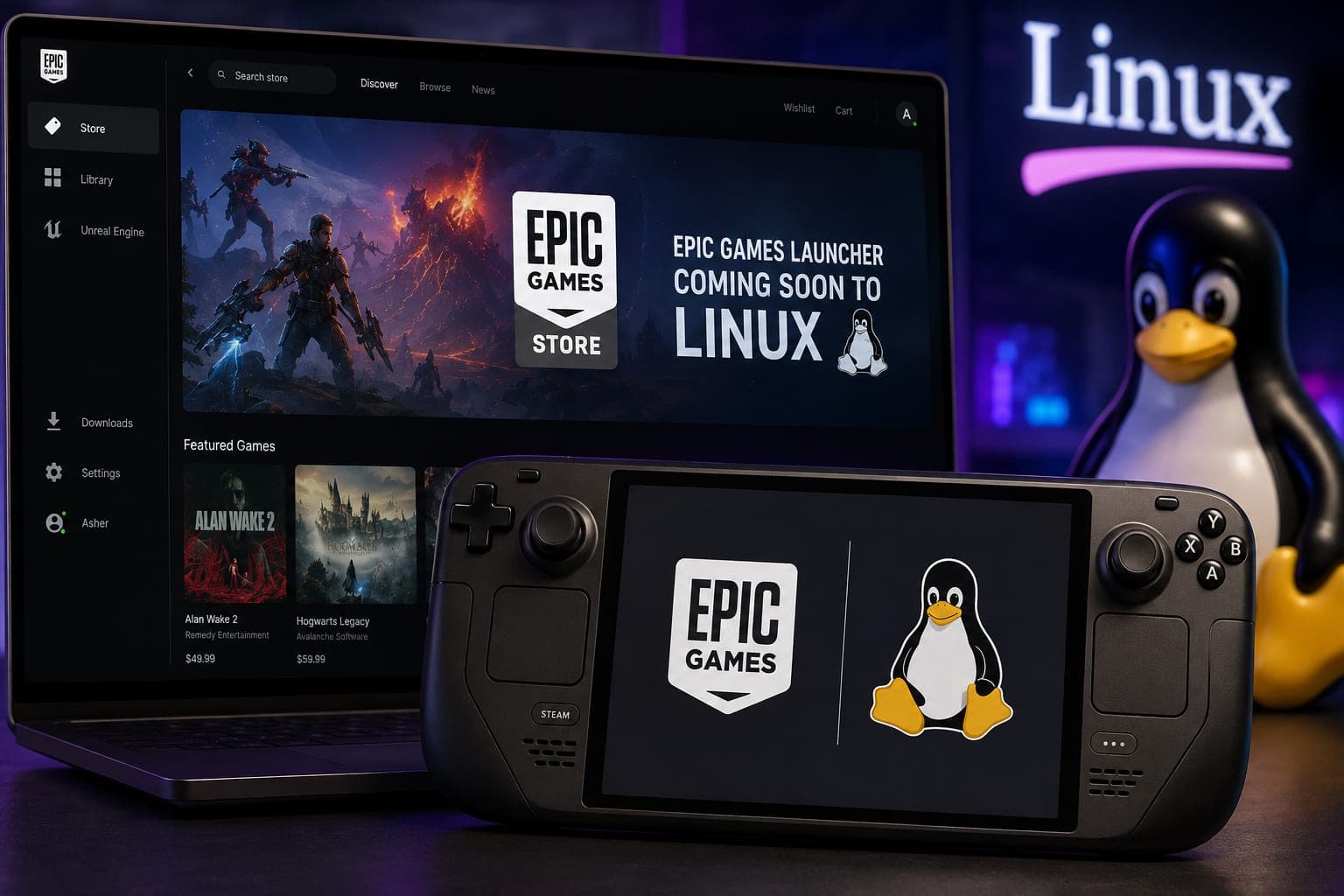
Epic Games is developing a native Linux version of its launcher, signaling stronger support for Linux gaming and potentially making Epic libraries easier to access on Steam Deck.
Epic Games Launcher Is Coming to Linux, but Not Yet
Epic Games is working on a native Linux version of the Epic Games Launcher, marking a significant shift in the company's approach to Linux gaming. This change was confirmed by an Epic Games staff member during a community Discord AMA on August 13. The staff member made it clear that Linux support will not be included in the upcoming preview build. A release date has not been announced.
Epic is not just talking about a simple port of the launcher to Linux. When asked about Linux support, the staff member said that the company needs to do more than just have a build of the launcher that can run natively on Linux. This suggests that Epic is thinking about how the launcher should behave on Linux, rather than just making it work on another operating system.
Why the Epic Games Launcher Linux Version Matters for Steam Deck
The biggest immediate beneficiary of this change could be Valve's Steam Deck and other SteamOS devices. Linux users can already access Epic libraries using third-party tools like Heroic Games Launcher, but these solutions are workarounds rather than first-party support. A native Epic Games Launcher would give users a direct way to manage their Epic library on Linux.
This is important for a platform like Steam Deck, where the desktop operating system is built around Linux, but the overall experience is designed to feel like a console. Native software can reduce the overhead of compatibility layers and eliminate some of the configuration that users currently encounter with third-party launchers. It also gives Epic direct control over updates, downloads, account features, and storefront functionality.
Epic Is Rebuilding the Launcher at the Same Time
The Linux announcement comes as Epic is rebuilding the Epic Games Launcher from the ground up. Epic's 2026 roadmap says the underlying architecture is being rebuilt to make the storefront more responsive and stable. The new launcher is being introduced separately from the Linux version, which means Linux users should not assume the first preview will support their platform.
The timing could still be important. A major architectural rewrite gives Epic a cleaner foundation for adding another operating system than trying to retrofit Linux support into an older client. Epic has also indicated that the new launcher will receive broader platform and usability improvements, making the Linux project potentially part of a larger effort to turn the launcher into a more modern storefront.
A Native Linux Launcher Does Not Mean Fortnite on Steam Deck
The Epic Games Launcher Linux version should not be confused with Fortnite support. A native storefront can provide access to an Epic account and game library, but individual games still have their own compatibility requirements. Fortnite remains a separate issue because of anti-cheat and platform support.
That makes the launcher announcement significant without turning it into a Fortnite announcement. Epic has previously enabled Easy Anti-Cheat support for Linux and Proton at the developer level, but developers still have to configure their games to use it. Valve's Steamworks documentation explains that Easy Anti-Cheat can work through Proton when the developer enables the necessary support.
What Epic's Linux Strategy Could Look Like
Epic has not yet disclosed which Linux distributions will be supported, how the launcher will be packaged, or what Linux-specific features will ship with it. Those details may matter as much as the existence of the launcher itself. Steam Deck support, for example, would require Epic to account for SteamOS's particular environment rather than treating desktop Linux as the only target.
The company's statement also leaves room for deeper integration with Linux gaming tools. That could eventually include better controller support, compatibility-layer management, or other platform-specific features, but those possibilities should be treated as expectations rather than confirmed features.
Epic's Shift Could Be Bigger Than One Launcher
Epic's decision is part of a broader improvement in the Linux gaming ecosystem. Valve's Proton has made Windows games increasingly practical on Linux, while third-party projects like Heroic have filled gaps left by major storefronts. Epic is now moving toward first-party support, and GOG is also working on a native Linux version of its Galaxy client.
That changes the strategic question for Epic. Linux is no longer simply a compatibility problem that enthusiasts solve themselves. Steam Deck demonstrated that a Linux-based gaming platform can become a mainstream consumer product, while the wider Steam ecosystem gives developers a reason to consider Linux compatibility. Epic's native launcher could therefore be less about serving a niche desktop audience and more about ensuring its store remains relevant as gaming hardware becomes less tied to Windows.
The Real Test Will Come After Launch
Epic has only provided a vague timeline for the launch, saying it will happen soon. The upcoming Launcher V2 preview will not include Linux support, and Epic has not published a launch date for the native client.
The more meaningful test will be whether Epic delivers a Linux client that is maintained and competitive with the community tools already available. Heroic has established that Linux gamers can manage Epic libraries without an official client. Epic therefore has to offer more than a different logo and a native executable. If its launcher delivers strong Steam Deck support, reliable updates, and a polished Linux-first experience, it could become an important step in making Linux a first-class gaming platform.