PPI Report Shows U.S. Wholesale Inflation Is Cooling
The July PPI report shows U.S. wholesale inflation cooling, easing pressure on the Federal Reserve while keeping markets focused on the path of interest rates.
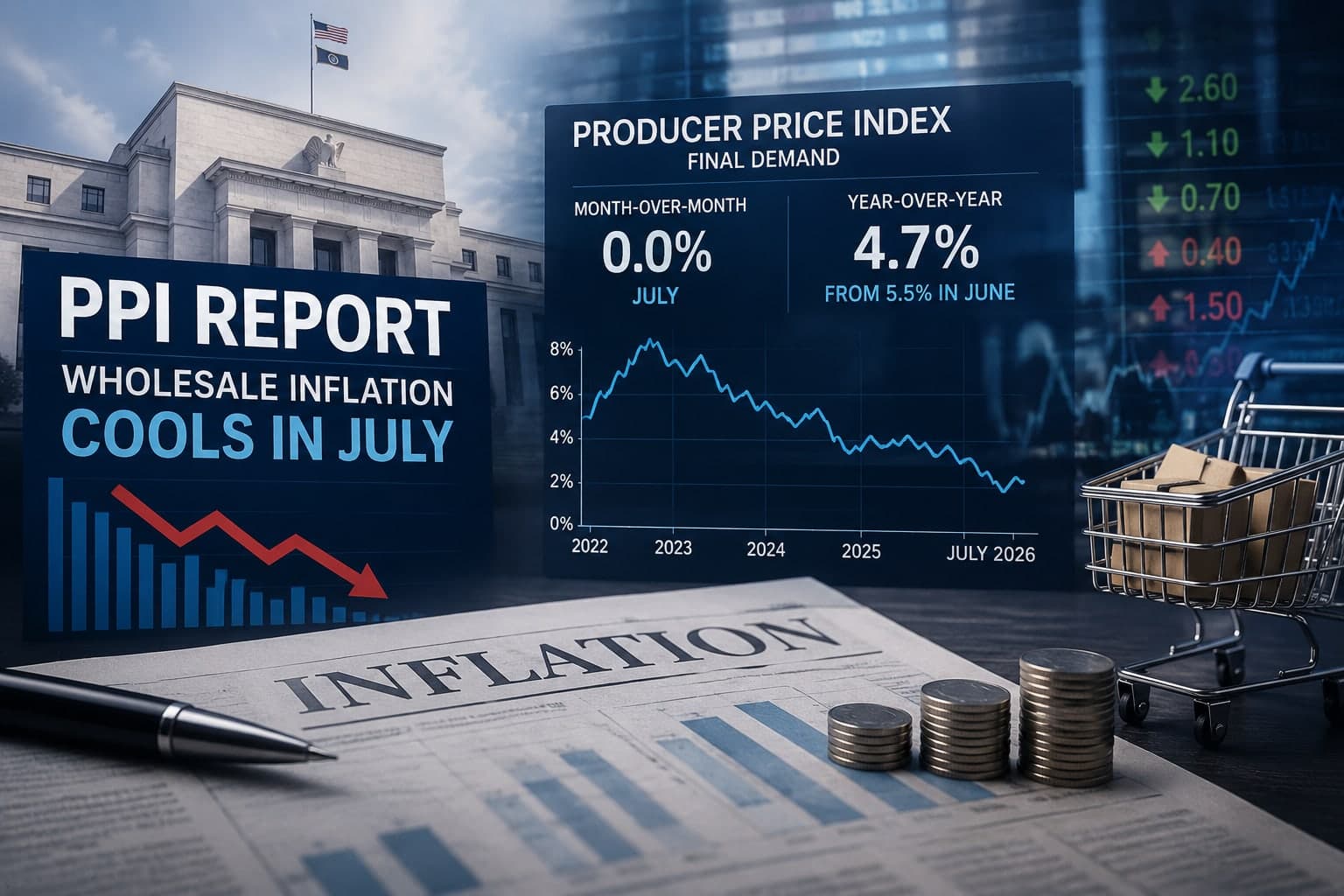
July PPI Report Reveals Slowing Wholesale Inflation
The July PPI report brought a welcome surprise to U.S. markets, with a more encouraging inflation signal than economists had anticipated. The Producer Price Index for final demand remained unchanged in July, defying the 0.1% increase forecast by economists. Annual producer-price growth slowed to 4.7% from 5.5% in June. This suggests that wholesale price pressures are easing, rather than gaining momentum. However, investors must still keep a close eye on the underlying components that influence the Federal Reserve's preferred inflation measure.
The Significance of the PPI Report for the Federal Reserve
The PPI report holds importance because producer prices can serve as an early indicator of pressures that eventually affect businesses and consumers. It also contains components that feed into the Personal Consumption Expenditures inflation gauge, which the Federal Reserve monitors closely. The July result is particularly noteworthy, given the previous day's CPI report showed annual consumer inflation easing to 3.4% from 3.5% in June, while core CPI fell to 2.5% from 2.6%.
This combination provides policymakers with some breathing room. Markets had been concerned that stronger inflation and higher energy prices could force the Fed to raise rates again in September. However, after the latest inflation readings, these expectations have diminished. Reuters reported that money markets were pricing a 66% chance of the Fed keeping rates unchanged at the next meeting, although these expectations can shift as additional economic data emerges.
A Cooler PPI Does Not Mark the End of the Inflation Debate
Although the headline PPI number is encouraging, it does not signify that inflation risks have vanished. The Fed must still consider services prices, wages, energy costs, and the broader inflation trend. Core PPI is particularly important, as it strips out food and energy, offering a clearer view of underlying price pressure. Investors had anticipated a monthly core increase of about 0.3% before the release, making the report's details just as important as the headline figure.
Oil prices introduce another layer of complexity. Crude prices have been volatile due to tensions between the United States and Iran, as well as reduced traffic through the Strait of Hormuz. Reuters reported that Brent crude fell about 2% on Thursday, as investors weighed weaker demand expectations and rising U.S. crude inventories. If energy prices rise again, they could put renewed pressure on upcoming inflation readings, even if July's producer prices remained contained.
Implications of the PPI Report for Stocks and Bonds
For financial markets, a softer PPI reduces one of the immediate arguments for higher interest rates. Lower rate expectations can support stocks by reducing the discount applied to future corporate earnings. Treasury yields can come under pressure as investors become less concerned about additional monetary tightening. This is particularly significant for technology and growth stocks, which have been sensitive to changes in interest-rate expectations during this year's market rally.
However, the market reaction is unlikely to depend on a single inflation report. Investors still have another round of economic data ahead of the September Fed meeting, including another CPI report and employment information. Reuters noted that the July PPI report is particularly important due to its connection to components used in the Fed's preferred PCE inflation gauge.
The Broader Signal From July's PPI Report
The key takeaway from the July PPI report is that wholesale inflation did not reaccelerate, despite concerns about energy and geopolitical shocks. This gives markets a reason to ease some of their fears about an immediate Fed hike. However, the data is better characterized as a favorable development rather than a definitive victory over inflation. The next test will be whether price pressures remain contained as energy markets and the broader economy respond to ongoing geopolitical uncertainty.
For investors, the key question is shifting from whether inflation is rising sharply to whether the recent moderation can persist. If producer and consumer inflation continue to cool while employment weakens, the case for holding rates steady becomes stronger. If energy prices rebound and inflation accelerates again, the Fed could face renewed pressure to maintain a restrictive policy.